Case study, UAE schools
Why the CBSE curriculum keeps winning over families in the Emirates
The Central Board of Secondary Education, better known as CBSE, is one of the most widely recognised school systems in the world. It is trusted by millions of students across India and by a large share of the Indian expatriate community living in the UAE. Walk into almost any residential district in Ajman, Sharjah, Dubai or Abu Dhabi and you will find a CBSE school nearby, quietly turning out students who move on to universities in the UAE, India, the UK and North America. This article explains what the curriculum actually contains, why it travels so well, and what parents notice once their child settles into it.
The situation
A curriculum built for mobility
CBSE is administered by an autonomous body under the Government of India and follows a national framework used by over 27,000 affiliated schools worldwide, according to the CBSE overview on Wikipedia. For UAE-based families, the pull is simple: the syllabus is consistent from Grade 1 through Grade 12, the Class 10 and Class 12 board examinations are recognised by universities globally, and a child transferring from Kerala or Kolkata to Ajman can pick up the same textbook chapter on the same page.
That continuity matters. Many expatriate parents move for work every few years, and CBSE removes the fear of losing a school year to a curriculum change.
Before CBSE and after CBSE: a common family experience
A family relocating from Mumbai to Ajman worries about their daughter losing a year. The previous school followed a state board, textbooks differed, and marks would not transfer cleanly. Extracurriculars were treated as optional, and screen time at home was replacing reading.
Enrolled in a CBSE school in the UAE, she picks up mid-term without repeating content. Science and mathematics carry the same weight and structure. Physical education, arts and computer science are timetabled, not squeezed in. By the end of the year, she has taken part in a science fair, learned basic Python, and started reading for pleasure again.
What the CBSE curriculum actually covers
The subject mix is deliberately broad. It is designed so students leave school numerate, literate in more than one language, digitally aware, and physically active. The core areas across primary and secondary stages include:
- Mathematicsfrom arithmetic and geometry in the primary years to algebra, trigonometry and calculus at the senior level.
- Sciencetaught as an integrated subject until Class 10 and then split into Physics, Chemistry and Biology.
- Languagesusually English plus Hindi and a third language such as Arabic, French or a regional Indian language.
- Social Studiescombining history, geography, civics and economics.
- Computer Sciencestarting with digital literacy and progressing to coding in Python and computational thinking.
- Physical Educationtreated as a graded subject rather than a free period.
- Arts and Co-curricular Activitiesincluding music, visual art, drama and club-based learning.
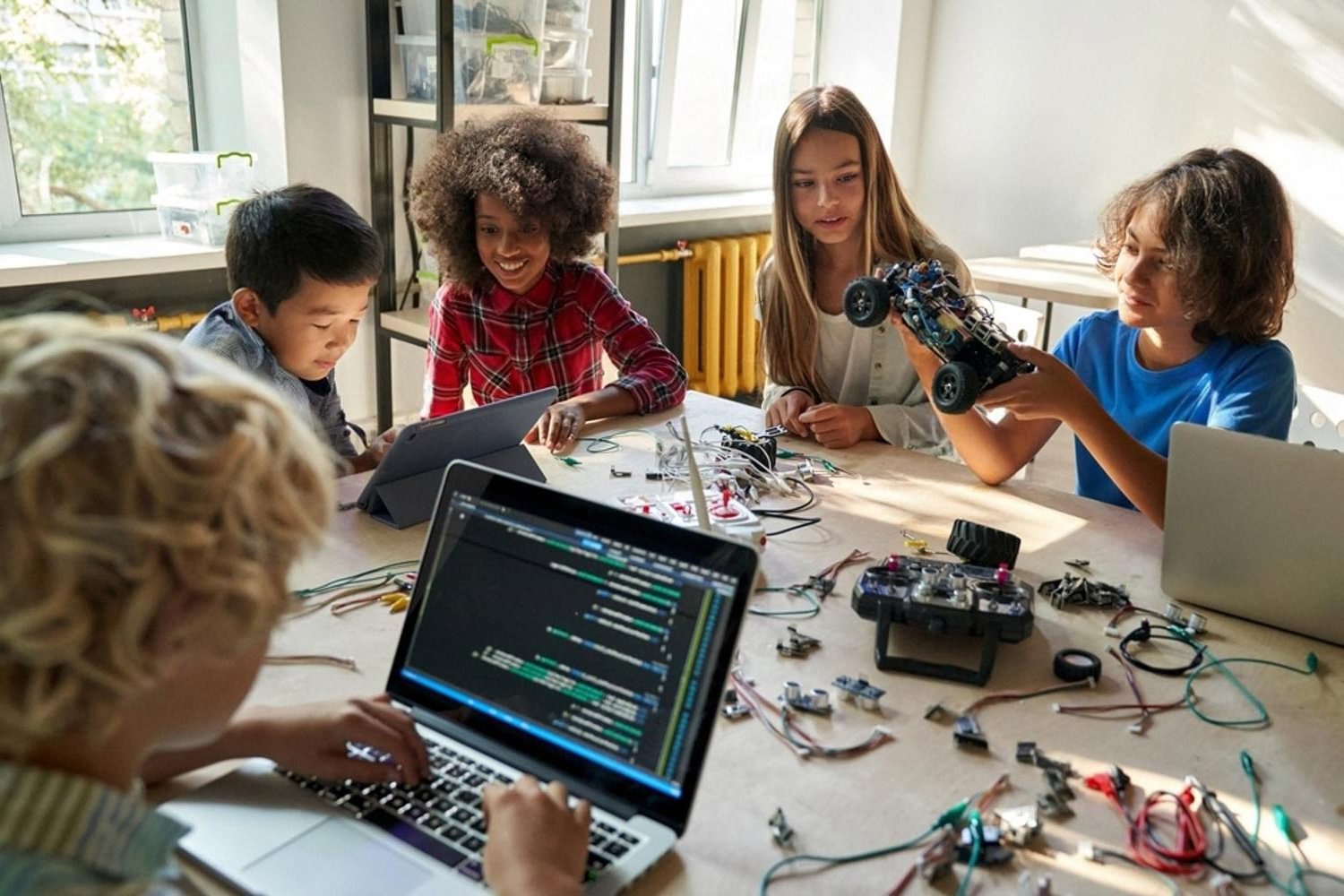
The National Curriculum Framework revision, referenced by NCERT has also pushed CBSE towards competency-based questions in board exams, meaning less rote recall and more applied reasoning.
What UAE parents tried, and what worked
What we tried
- Heavy after-school tuition to cover perceived gaps in state-board schooling.
- Extra language classes on weekends to keep up with Arabic requirements in the UAE.
- Ad-hoc coding bootcamps during summer breaks.
- Separate art and music lessons booked privately in the evenings.
What worked
- Choosing a CBSE school where computer science, arts and PE were already timetabled inside the school day.
- Letting the classroom teacher, not a tutor, guide the child through competency-based questions.
- Using the co-curricular calendar (science fair, MUN, sports day) as the main enrichment engine.
- Treating the third-language slot as an opportunity to build Arabic fluency, useful for life in the UAE.
Families who compared this approach with piecemeal external classes almost always reported less fatigue at home and better report cards. Parents interested in seeing this play out in a specific school can apply online to City School Ajman and review the admission criteria in detail.
The life skills quietly built into the timetable
Communication
Multi-language exposure, class presentations and group projects push students to speak clearly in more than one setting. By Class 8, most CBSE students can present a topic in English without notes.
Critical thinking
The recent shift to case-based and source-based questions in board exams rewards students who can reason through unfamiliar problems, not just memorise definitions.
Creativity
Arts, design thinking modules and open-ended science projects give room to try, fail and try again, which is where original ideas actually come from.
Teamwork
Sports, house systems, MUN and group assignments make collaboration a habit rather than a workshop topic. Students learn to divide work, hold each other accountable, and share credit.
The parents who are happiest with CBSE in the UAE are not the ones chasing 99 percent. They are the ones who wanted a school day that already includes coding, PE, art and Arabic, so evenings can be for family and sleep.
Why it remains a preferred system
CBSE continues to be one of the most preferred education systems because it combines academic rigour with practical, everyday learning. The subject list is broad enough to protect a child who has not yet decided on a career, the assessment style has moved beyond memorisation, and the network of affiliated schools makes relocation almost painless. For families in the UAE juggling careers, cross-border ties and long-term university plans, that combination is hard to beat.
Frequently asked questions
Is the CBSE curriculum recognised by universities outside India?
Yes. CBSE Class 12 results are accepted by universities across the UAE, India, the UK, Canada, Australia and most of Europe and North America. Individual universities may ask for a minimum aggregate, but the board itself is well established in international admissions offices.
How is CBSE different from other curricula available in the UAE?
Compared with British or American curricula, CBSE tends to be more structured, with a national syllabus and set textbooks. It places strong emphasis on mathematics and science, and it typically includes a third language. IB and British curricula usually offer more subject choice at the senior level, while CBSE offers more predictability and lower fees.
Does CBSE include Arabic and Islamic Studies for students in the UAE?
Yes. CBSE schools operating in the UAE follow the Ministry of Education requirements, which include Arabic as a subject for all students and Islamic Studies for Muslim students. These are integrated into the school timetable alongside the standard CBSE subjects.
Is the CBSE workload manageable for younger children?
In the primary years the workload is light and activity-based, with a focus on foundational literacy, numeracy and social skills. The pace increases from Class 6 onwards. Good CBSE schools in the UAE balance homework with sports, arts and free time, so the timetable does not overwhelm younger students.
Can my child switch from a state board in India to a CBSE school in the UAE mid-year?
It is possible, especially in the primary and middle years. Schools usually ask for previous report cards and a transfer certificate. Because CBSE follows a uniform national syllabus, the adjustment is often smoother than switching between two different state boards.
How do I choose the right CBSE school in Ajman or the wider UAE?
Look at KHDA or the relevant emirate’s inspection ratings, teacher-student ratios, co-curricular offerings, and the school’s board exam results over the last few years. Visit the campus if you can, and speak to current parents. Fees, transport routes and after-school programmes also matter for daily life.
Skydiver, ramen eater, DJ, Saul Bass fan and front-end designer. Acting at the fulcrum of minimalism and sustainability to develop visual solutions that inform and persuade. I sometimes make random things with friends.